Motivate your team and level up
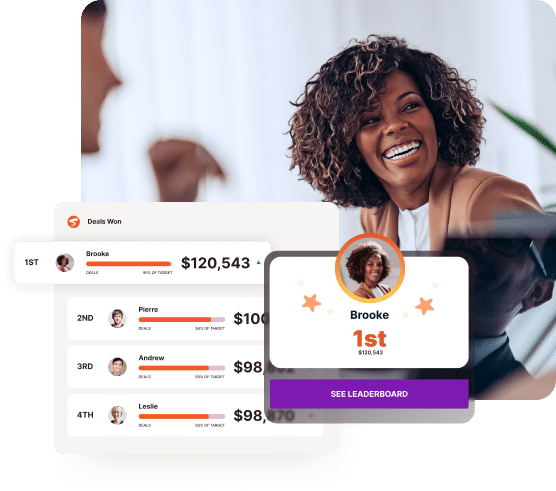
Create competitions that make performance visible. Push your team to reach higher.

Motivating companies across the globe through gamification


Rally your crew

Gamification
Boost your teams’ performance when you add gamified competitions to the mix.
Learn more
Competitions & Visibility
Highlight their achievements with badges, personalized videos, and more.
Learn more
Keep morale high when everyone is in the loop.
With easy communication across platforms, your team stays inspired to surpass their milestones in the office, working from home, or on the road.

Paul O’Dwyer
Twenty Mile March Pty Ltd
I work a lot with fast growing businesses, and Spinify has been a great tool to make sure we execute well from our strategic plans.

Equip your squad to win
Shape company culture with tools that keep teams motivated to do great.
Get Started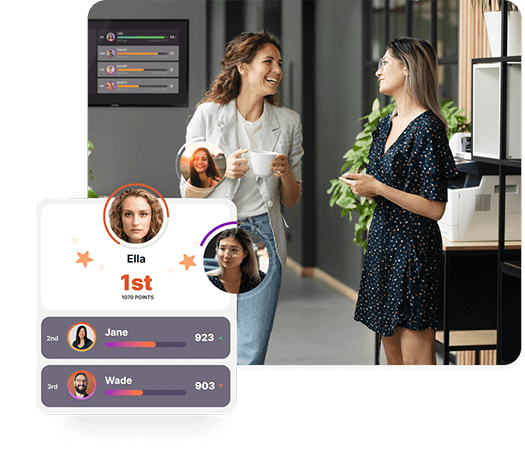
being reached
Top 10 Sales Contest Ideas
We’ve all heard the term “sales gamification” floating around the internet. Sales managers across the globe swear by it. They say it boosts sales motivation. And sure, there are obvious benefits to using positive reinforcement. But how do you do it in the workplace?
Read Article
The same workflow, just more fun
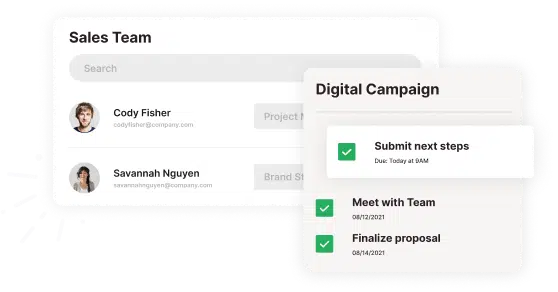
Spinify integrates seamlessly with your existing platforms.








Any kind of team, Anywhere
Nurture healthy competition. Gamification makes each team member feel recognized and appreciated. See how Spinify can help.
Any kind of team,
Anywhere
Nurture healthy competition. Gamification makes each team member feel recognized and appreciated. See how Spinify can help.
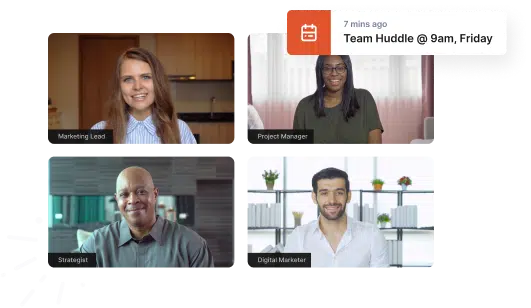
Any kind of team, Anywhere
Nurture healthy competition. Gamification makes each team member feel recognized and appreciated. See how Spinify can help.
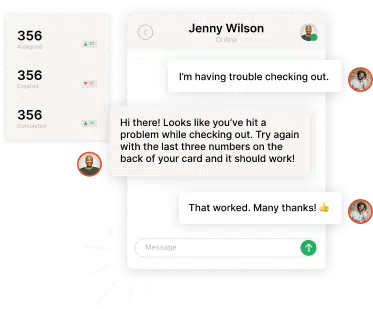
Any kind of team, Anywhere
Nurture healthy competition. Gamification makes each team member feel recognized and appreciated. See how Spinify can help.
Sales Team
See AllAny kind of team,
Anywhere
Nurture healthy competition. Gamification makes each team member feel recognized and appreciated. See how Spinify can help.
Remote Teams
See AllAny kind of team, Anywhere
Nurture healthy competition. Gamification makes each team member feel recognized and appreciated. See how Spinify can help.
Service Teams
See AllDon’t just take our word for it!
See what our Customers are saying

The product is easy to integrate, just some minor integration with our Salesforce account and we were creating flashy content for our Sales Room Floor. Required no real insight as to how to build and configure reports as they are all available from templates.

Director of Sales & Customer Experience, RingByName
Gamification of my stats makes it more exciting to keep track of where I am at for the month.

Ellie Downs
The biggest problems we are able to solve with Spinify is keeping our agents engaged and in friendly competition with each other, we noticed an incredible uplift the moment we implemented Spinify as the agents were able to see key metrics of their performance and their peers

Vice President Retail Support, MAX Credit Union
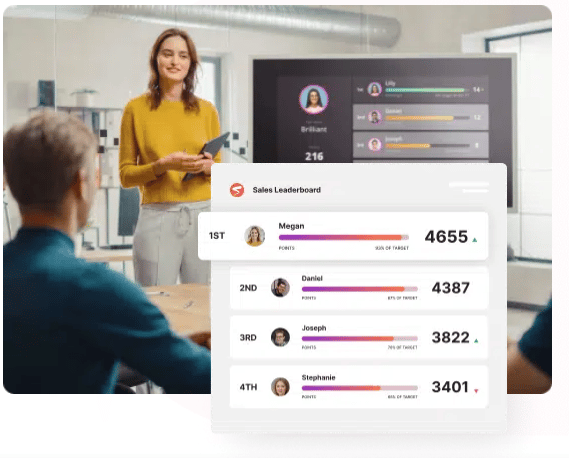
We love how visual it is! The leader-boards encourage healthy competition and staff achievements are recorded in real-time, when someone wins an award, everyone can celebrate the success! We also love using it to advertise exciting news/events etc.

HR Manager, Punch!
Our sales team is remote and Spinify has allowed our folks to stay competitive using the Salesforce tab, the mobile app, and the daily winner emails. It’s really helped us to work more tightly.

Salesforce
The absolute simplicity of the platform. it does not try to do everything to help a team stay on track, but what it does, it does exceptionally well. It is visually attractive, and has been designed with gamification principles in mind
Scaling Up Coach for Tech Companies, Director, Investor, Ex-CEO
Award-winning gamification