Understanding Gamification in Sales Teams
In the competitive world of sales, maintaining high levels of engagement within teams is crucial. As of 2026, gamification has emerged as a pivotal strategy to enhance motivation and performance among sales professionals. But how exactly do gamification platforms differ in their approach to driving engagement? Let’s delve into the mechanics of gamification and explore its multifaceted impact on sales teams.
A New Era of Engagement
Gamification in sales has moved beyond mere point-scoring systems and badges to become a sophisticated tool for behavioral change and team enhancement. By incorporating game-like elements into sales processes, companies aim to tap into the intrinsic motivation of their salespeople. This strategy not only makes tasks more appealing but also aligns them with individual and organizational goals. But the question remains: what differentiates one gamification platform from another in terms of engagement?
Gamification Platforms: The Key Differentiators
1. Personalized Experiences
Personalization is a major trend. Platforms that offer personalized experiences, targeting individual goals and preferences, tend to see higher engagement rates. They leverage data analytics to tailor challenges and rewards, thus ensuring each salesperson feels valued and motivated.
2. The Power of Social Engagement
Some platforms emphasize social interaction as a crucial component. Integrating social features such as leaderboards, team challenges, and peer reviews fosters a sense of belonging and healthy competition. These elements motivate salespeople by connecting them to a larger community, enhancing both competition and collaboration.
3. Real-Time Feedback and Rewards
Immediate feedback is another critical factor. Platforms that provide real-time analytics and instant reward systems reinforce positive behavior instantly. This immediate recognition encourages continuous effort and improvement, driving sustained engagement.
5 Examples of Effective Sales Gamification
1. Scenario-Based Challenges
Platforms utilizing scenario-based challenges craft real-world sales scenarios for training purposes. Salespeople are put into virtual situations where they must apply their skills to win rewards, reflecting real success in the workplace. This method blends training with engagement by providing practical application opportunities.
2. Interactive Leaderboards
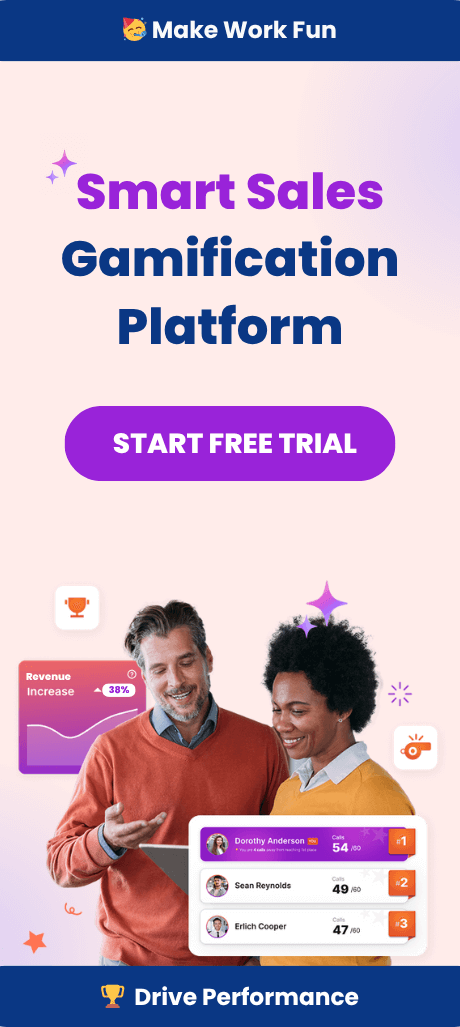
Interactive leaderboards are a staple of gamification. They not only display rankings but offer insights into performance metrics, allowing team members to track their growth. Such transparency helps foster a merit-based culture where achievements are celebrated.
3. Story-Driven Quests
The narrative approach engages users by embedding sales tasks within compelling stories, transforming mundane activities into adventurous quests.
This approach captivates the imagination of salespeople, turning goal achievement into an exciting narrative that encourages sustained involvement.
4. Customizable Avatar Systems
Some platforms afford users the ability to customize avatars, adding a layer of personal investment to their personas. This simple feature can significantly enhance user engagement by providing a visual representation of a user’s growth and achievements within the gamification platform.
5. Badge and Reward Systems
Although traditional, badge and reward systems have evolved. Modern platforms offer dynamic rewards that change based on performance. The unpredictability keeps salespeople engaged, as they constantly strive for the next level of achievement.
Building a Culture of Continuous Improvement
Implementing gamification isn’t just about adding fun to work. It’s about fostering a culture of continuous improvement and achievement. The right platform tailors this by aligning with the company’s broader vision, engaging employees on a personal and professional level, and driving substantive behavioral change.
Interested in seeing how gamification can transform your sales team? Book a Demo or Start a Trial with Spinify today to explore how these strategies can be applied in your organization.
Conclusion: The Future of Sales Gamification
As gamification continues to evolve, sales teams must adapt to innovative approaches that align with modern motivations and challenges. By understanding and implementing diverse gamification strategies, companies can unlock new levels of engagement and efficiency within their sales teams, securing a competitive edge in the marketplace.
For more insights on cultivating motivation and performance in sales teams, explore our other articles on motivation and engagement and learn how to keep your team at the top of their game.