Gamification’s Role in Customer Loyalty
In the competitive world of sales, customer loyalty sits at the pinnacle of success. As we approach 2025, the landscape is becoming increasingly innovative, with gamification taking center stage in transforming customer engagement. The digital age has opened new avenues for businesses to increase customer loyalty, and leveraging gamification promises to be one of the most powerful strategies.
Understanding Gamification: An Overview
Gamification refers to the application of game-design elements in non-game contexts, aiming to enhance user engagement, commitment, and enjoyment. In the sales sector, it’s about creating experiential environments where customers and employees alike are motivated to reach desired outcomes, thus fostering loyalty and repeat business. Elements often include the use of point systems, leaderboards, and reward systems to drive competitive spirit and engagement.
“Gamification bridges the gap between marketing strategies and user interaction, by transforming customers from passive consumers to active participants.”
Effective Gamification Features for Increasing Sales Results
When it comes to increasing sales through gamification, it’s crucial to know which features truly resonate with your audience. Here are some of the most effective:
- Points and Rewards Systems: Providing immediate feedback is essential. Points can be awarded for purchases, social sharing, or any engagement that benefits the brand. These points can then be converted into tangible rewards, offering a sense of achievement and a reason for customers to return.
- Leaderboards: Creating a sense of competition enhances engagement. Leaderboards allow customers to see their ranking relative to others, incentivizing them to engage more with the brand to climb the ranks.
- Progression Metrics: Visible progression reduces the tedium associated with repetitive tasks. Tracking and displaying user progress motivates continued interaction and can lead to higher customer retention rates.
- Customized Challenges: Tailored challenges that fit the profile and buying habits of customers make the experience personal and meaningful. Personalization increases the applicability and effectiveness of gamification strategies.
Spinify: A Leader in Gamification Solutions
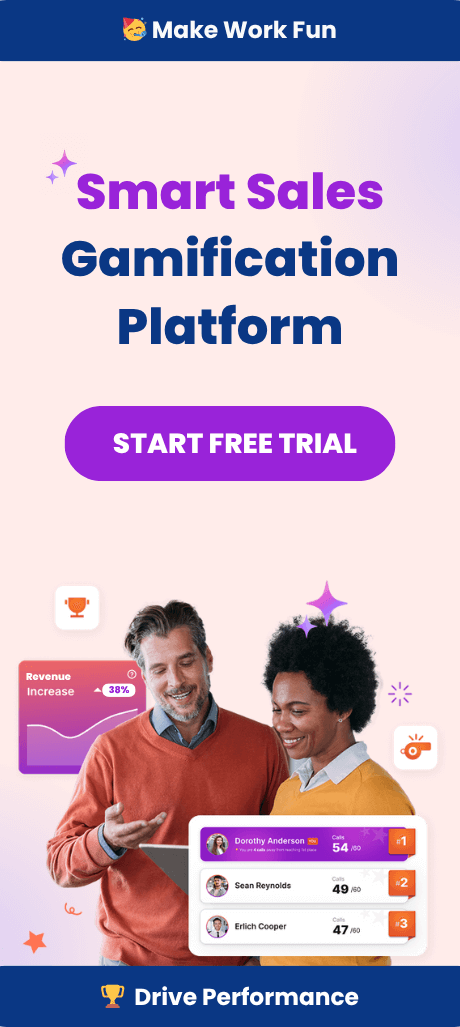
An example of leveraging gamification effectively can be seen in Spinify’s solutions. Spinify’s platform focuses on boosting sales team motivation through visual displays of progress and success, harnessing similar techniques to enhance customer interaction.
Innovative Trends in Sales Gamification Software for 2025
The evolution of technology means gamification continues to develop new methodologies to optimize engagement. As we look forward to 2025, several trends stand out for their potential impact:
- AI-Driven Personalization: With the integration of artificial intelligence, gamification experiences are becoming increasingly personalized, adapting to user behaviors and preferences in real-time, which significantly enhances user satisfaction and loyalty.
- Augmented Reality Experiences: AR adds a layer of interactivity that traditional methods cannot match, offering immersive experiences that capture user attention more effectively than ever before.
- Data-Driven Insights: Leveraging analytics to understand user behavior better can drive the creation of more targeted gamification strategies, resulting in higher engagement and better business outcomes.
- Collaborative Platforms: Encouraging team-based challenges and community engagement can deepen the sense of connection with a brand, fostering long-term loyalty.
These trends not only represent technological advancements but also reflect a shift in customer expectations, emphasizing the need for modern, interactive, and highly engaging customer experiences.
The Strategic Role of Gamification in Business Growth
For executive readers: Sales VPs, Enablement Leads, RevOps Directors, and CEOs, it is crucial to recognize that gamification is not just a tool for engagement but a strategic component of your growth strategy. Gamification can lead to tangible increases in customer lifetime value, sales performance, and employee satisfaction.
Organizations that incorporate gamification effectively see improvements not just in sales numbers, but in customer perception and employee morale. This is evidenced by reduced churn and higher conversion rates, showcasing the long-term benefits of embedding game mechanics in your corporate structure.
Internal Culture and Gamification
Beyond consumer interaction, gamification should permeate company culture. Platforms like Spinify offer solutions that encourage internal competition and productivity, highlighting achievements through real-time leaderboards, which can be trialed and explored for your teams.
Conclusion: The Future of Customer Loyalty
In 2025 and beyond, adopting gamification is about creating a sustainable model that supports both customer engagement and retention. Businesses must be agile, embracing technology trends that enhance user interaction while maintaining the human-centric approaches that retain customer loyalty. As gamification continues to evolve, integrating it into your business strategy will be crucial for standing out in an increasingly digital marketplace.
For those looking to embrace gamification, Spinify offers a demo that showcases how their gamification platform can align with your business goals to drive customer loyalty and sales performance.