#1 Sales Gamification on G2 — 4.6★ from 854+ verified reviews.
  Log in
Sales is an inherently demanding profession, characterized by its fast pace and high-pressure environment. Even the most skilled and dedicated sales representatives can, over time, experience a decline in motivation. This subtle disengagement, known as quiet quitting, where employees do just enough to meet minimum requirements, has emerged as a significant challenge in contemporary workplaces.
A 2023 Gallup report revealed that a staggering 59% of employees globally are not actively engaged in their work. For sales leaders, this widespread disengagement has direct and detrimental impacts on revenue generation, the strength of customer relationships, and overall team morale.
Read on to discover how to identify the signs of quiet quitting and reignite your sales team’s passion.
Understanding What Quiet Quitting Really Means
Quiet quitting, particularly in the demanding world of sales, is often misunderstood. It’s not a deliberate act of defiance or a sudden descent into laziness. Instead, it’s a gradual and often subtle withdrawal, a symptom of a deeper problem: disconnection. Sales representatives who experience quiet quitting are not necessarily slacking off; rather, they have emotionally disengaged from their roles and the company. They stop striving for excellence because the intrinsic motivators that once fueled their ambition have diminished or disappeared entirely.
When reps feel undervalued, unsupported, or simply uninspired, they begin to reduce their effort to the bare minimum required to avoid reprimand. They perform their duties, but they no longer bring the passion, creativity, and proactive drive that are essential for true sales success. Identifying the early, often subtle, signs of disengagement – such as a decrease in proactive outreach, less enthusiasm in team meetings, or a reluctance to take on new challenges – is absolutely critical. Proactive intervention at this stage can prevent the quiet quitting from escalating into severe performance issues, high turnover, and a toxic team environment.
The Unique Pressure of Sales Roles
The sales profession is inherently challenging and uniquely stressful. Sales representatives operate under constant scrutiny, facing relentless pressure to meet and exceed ambitious targets. They frequently encounter rejection, not just from potential clients but sometimes also from internal stakeholders. The competitive nature of sales, both against external competitors and often within their own teams, adds another layer of intensity.
Without adequate recognition for their efforts, clear pathways for career progression, and a supportive culture, these intense pressures can quickly lead to severe burnout. Burnout in sales is not just about exhaustion; it’s a state of chronic stress that results in emotional, physical, and mental depletion. Industry leaders and successful companies like HubSpot and Salesforce have long understood that sustained sales success is not solely dependent on rigorous training programs, attractive financial incentives, or cutting-edge CRM tools.
While these elements are important, they are fundamentally underpinned by emotional engagement. When sales reps feel genuinely connected to their company’s mission, valued by their leadership, and supported in their professional growth, they are far more resilient to the inherent pressures of the role and significantly more likely to achieve and surpass their goals. This emotional investment transforms their daily grind into a meaningful pursuit.
The Hidden Costs of Quiet Quitting

The impact of quiet quitting in sales extends far beyond an individual’s reduced effort. It creates a ripple effect throughout the organization, leading to significant, often hidden costs. The most direct consequence is a tangible loss of missed opportunities. Disengaged salespeople are less likely to proactively identify new leads, pursue challenging deals with tenacity, or go the extra mile to close sales. This directly translates into fewer deals being closed, slower revenue growth, and a shrinking market share.
Beyond financial losses, quiet quitting severely damages team morale. When some team members are visibly disengaged, it can demotivating for others who are still committed and performing at a high level. This can breed resentment, reduce collaboration, and ultimately erode the collective spirit and drive of the entire sales force. Furthermore, customer satisfaction takes a hit. Disengaged reps are less likely to provide exceptional customer service, build strong client relationships, or effectively resolve issues, leading to dissatisfied customers, decreased loyalty, and a tarnished brand reputation.
A single disengaged salesperson, therefore, is not an isolated problem; they can act as a corrosive agent, subtly undermining the entire team’s motivation, ultimately resulting in a quantifiable reduction in sales performance and a significant drag on overall business profitability.
The Role of Recognition in Reigniting Motivation

In the battle against disengagement and quiet quitting, recognition emerges as one of the most powerful and effective weapons. Simple, sincere, and timely appreciation can dramatically shift a salesperson’s mindset from apathy to renewed enthusiasm. Sales representatives who feel genuinely appreciated for their hard work, resilience, and achievements are far more likely to feel a sense of purpose and commitment. This appreciation fuels their intrinsic motivation, encouraging them to go above and beyond what is merely expected.
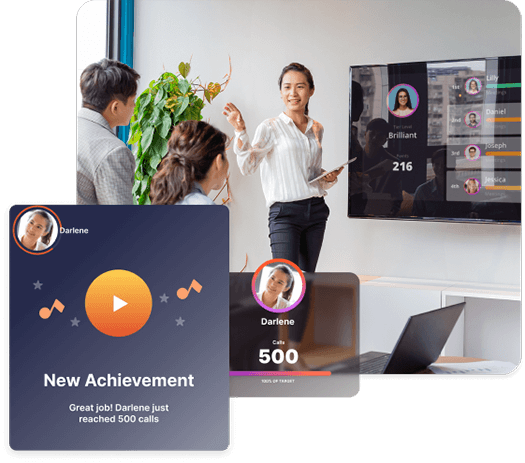
Platforms and systems that facilitate real-time recognition are particularly impactful. Spinify’s real-time recognition system, for example, is designed to highlight achievements the very moment they happen – celebrating closed deals, successful calls, milestone achievements, or exceptional customer service in an immediate and public way.
This instant appreciation creates a dynamic and positive feedback loop, transforming the workplace into a culture where effort is acknowledged, success is celebrated, and every salesperson feels seen and valued. This continuous reinforcement builds a sense of belonging and value, directly combating the disconnection that underpins quiet quitting and reigniting the passion and drive essential for a high-performing sales team.
How Gamification Rebuilds Engagement
Gamification injects a much-needed shot of adrenaline into the sales process, transforming what can often feel like a monotonous grind into an exhilarating journey. By strategically applying game-like elements to performance metrics, Spinify transmutes routine sales tasks into engaging challenges, leaderboards, and tangible rewards.
This innovative approach doesn’t just make work more fun; it strategically cultivates a dynamic environment of healthy competition and renewed focus among team members. When reps see their progress visualized, compete for top spots, and earn recognition, their intrinsic motivation soars, leading to a demonstrable uplift in activity and overall productivity. It’s about making the pursuit of sales goals as compelling as a personal best in a video game, fostering a culture where every win, big or small, feels celebrated and meaningful.
Identifying Signs of Disengagement Early
For managers, the insidious creep of “quiet quitting” can often go unnoticed until it’s too late. However, attentive leaders can proactively identify the early warning signs by vigilantly monitoring subtle yet significant shifts in team member behavior. These can include a noticeable reduction in communication, a decline in the generation of creative ideas, or a marked decrease in active participation during meetings.

The power of Spinify lies in its sophisticated performance analytics, which act as an early detection system. By providing granular data and actionable insights, Spinify makes it remarkably easy to identify changes in engagement patterns and individual performance trends long before they escalate into serious, deeply entrenched problems. This proactive intelligence empowers managers to intervene with targeted support and coaching, preventing disengagement from taking root.
The Importance of Coaching Over Control
One of the most corrosive forces to sales motivation is micromanagement. When reps feel constantly scrutinized and controlled, their sense of autonomy evaporates, leading to burnout and disengagement. Conversely, effective coaching operates from a philosophy of empowerment, guiding sales representatives to take genuine ownership of their performance and professional development. Spinify’s cutting-edge AI-powered coaching tools are designed to facilitate this crucial shift.
These tools provide personalized insights, actionable data, and constructive feedback, enabling managers to become true mentors. They can offer precise guidance and support without the suffocating presence of constant hovering, fostering an environment where reps feel trusted, valued, and capable of self-direction. This approach not only boosts individual performance but also cultivates a more resilient and self-sufficient sales force.

Creating a Culture of Belonging
At the heart of sustained engagement is a profound sense of connection. Salespeople, like all employees, are significantly more engaged and committed when they feel an authentic connection to their team and the broader organization. Cultivating a robust culture of belonging is paramount, achieved through intentional efforts in fostering collaboration, ensuring transparency across all levels, and celebrating shared successes.
When team members feel like an integral part of something larger than themselves, their emotional investment in the company’s goals deepens significantly. This collective spirit transforms individual tasks into a shared mission, reinforcing loyalty and dedication. A strong sense of belonging reduces feelings of isolation and reinforces that everyone is working towards a common objective, fostering a supportive and high-performing environment.
Focusing on Personal Growth and Career Development
A common thread among “quiet quitters” is a loss of perspective regarding how their current role contributes to their long-term professional and personal aspirations. When individuals can’t see a clear future or pathway for advancement, their purpose and drive inevitably wane. To counteract this, organizations must proactively offer clear, well-defined pathways for career advancement and invest meaningfully in professional development opportunities. This commitment to growth is not merely a perk; it’s a powerful catalyst for reigniting purpose and drive.

According to LinkedIn’s insightful 2024 Workplace Learning Report, a staggering 94% of employees would commit to staying longer at a company that actively invests in their careers. This statistic underscores the critical importance of providing continuous learning, mentorship, and opportunities for skill enhancement, demonstrating to employees that their future is valued and supported within the organization.
Setting Clear, Meaningful Goals
Vague targets are a primary driver of confusion and frustration within sales teams. Without a clear understanding of what they are working towards, sales representatives can quickly become disengaged and lose motivation. To combat this, it’s crucial to establish specific, achievable, relevant, and time-bound (SMART) goals that directly align with broader company priorities and objectives.
These goals should not only be communicated clearly but also be easily trackable. Spinify’s dynamic dashboards excel at visualizing these goals in real time, providing a constant, tangible reminder of progress. This real-time visibility fosters a sense of purpose and keeps sales reps focused on their individual and team contributions, ultimately reigniting their drive to succeed.
Encouraging Peer Motivation and Team Spirit

While sales professionals are often characterized by their competitive nature, this drive can be strategically harnessed to foster collaboration rather than just individual rivalry. Cultivating an environment that encourages peer recognition and celebrates shared successes is vital for building a strong, cohesive team. When reps acknowledge each other’s achievements and celebrate collective wins, it strengthens camaraderie and cultivates a supportive team spirit.
Spinify’s social leaderboards are instrumental in facilitating this, providing a platform for public acknowledgment and friendly competition. By highlighting individual and team achievements, these leaderboards not only motivate but also reinforce the idea that collective success is paramount, transforming individual efforts into a unified pursuit of excellence.
Providing Regular, Actionable Feedback
Effective feedback is a powerful tool for empowerment, not a vehicle for criticism. Sales managers should prioritize regular, one-on-one conversations that are specifically designed to highlight strengths and identify concrete opportunities for improvement. This approach makes employees feel genuinely supported and invested in. Feedback should be constructive, data-driven, and focused on specific behaviors or outcomes rather than personal attributes.
Spinify assists managers in this crucial process by providing robust tools to track individual and team progress, offering data-driven insights that inform these conversations. This objective data helps managers deliver feedback that is not only actionable but also builds confidence and encourages continuous professional development within the sales team.
Improving Communication and Transparency

A significant root cause of quiet quitting is often poor communication. When employees feel unheard, uninformed, or disconnected from the larger organizational vision, disengagement is an almost inevitable outcome. To counteract this, managers must prioritize open dialogue, ensuring that information flows freely and transparently throughout the team. This involves providing regular updates on company performance, strategic shifts, and departmental goals.
More importantly, it requires active listening – genuinely understanding the concerns, suggestions, and perspectives of the sales team. By fostering an environment of trust and open communication, where every voice feels valued, managers can significantly improve alignment, boost morale, and prevent the silent disengagement that characterizes quiet quitting.
Celebrating Progress, Not Just Perfection
Focusing solely on top performers can inadvertently demotivate the majority of a sales team. While recognizing stellar achievements is important, true engagement blossoms when progress, effort, and growth are celebrated across the board. This inclusive approach fosters a sense of achievement and belonging for every team member, not just the elite.
Platforms like Spinify leverage gamification tools to make it effortless to acknowledge and reward consistent effort and incremental improvements, rather than exclusively fixating on final results. This shift in recognition strategy ensures that everyone feels valued and motivated to contribute, knowing that their hard work is seen and appreciated, regardless of whether they hit every single target every time. It builds a culture where learning and development are celebrated, encouraging reps to take risks and grow without fear of not being “perfect.”
Reducing Burnout Through Balance
The relentless pressure often associated with sales can lead to severe burnout, significantly impacting long-term performance and employee retention. It’s crucial for sales organizations to prioritize work-life balance and establish realistic workloads to sustain team health and productivity. Encouraging flexible schedules, promoting mental well-being initiatives, and implementing robust recognition programs are vital strategies to mitigate stress and boost overall productivity.
When employees feel supported in managing their personal and professional lives, they are more likely to be engaged, resilient, and dedicated to their roles. This proactive approach to well-being transforms a high-pressure environment into one that is sustainable and conducive to continuous high performance.
How Spinify Helps Prevent Quiet Quitting
Spinify actively combats the insidious trend of quiet quitting by integrating gamified motivation with real-time recognition. By offering a dynamic platform that tracks individual and team achievements, Spinify provides unparalleled visibility into performance. This transparency ensures that sales representatives are consistently focused on their goals, receive immediate acknowledgment for their efforts, and remain energized and engaged.

Crucially, this system empowers managers to motivate their teams effectively without resorting to micromanagement, fostering an environment of trust and autonomy. Spinify transforms daily tasks into engaging challenges, making work more enjoyable and creating a positive feedback loop that reinforces desired behaviors and outcomes.
Real-World Examples of Reignited Teams
The power of recognition-focused initiatives to boost employee engagement is clearly demonstrated by leading companies such as Atlassian and HubSpot. These organizations have witnessed a significant surge in their employees’ energy and creativity by prioritizing a culture where efforts are visibly acknowledged and appreciated.
When employees feel seen and valued for their contributions, their motivation levels soar, directly impacting their productivity and innovation. These success stories underscore a fundamental truth: a workplace culture that emphasizes visibility and appreciation is fertile ground for thriving motivation and sustained high performance. It proves that investment in recognition is an investment in the very heart of a company’s workforce.
Creating a Long-Term Strategy for Engagement
Addressing the challenge of quiet quitting requires more than just a quick fix; it demands a comprehensive, long-term commitment to fostering an engaging work environment. This strategy must be rooted in a strong organizational culture, transparent communication channels, and a robust system of recognition. Managers play a pivotal role in this process by regularly reviewing engagement data to identify trends and areas for improvement.
Furthermore, providing continuous development opportunities empowers employees to grow professionally, while consistently celebrating individual and team wins reinforces a positive and appreciative atmosphere. By integrating these elements, companies can cultivate a workplace where employees feel connected, valued, and genuinely motivated to contribute their best, effectively inoculating the team against disengagement and quiet quitting.
Reignite Your Team With Purpose and Recognition
By focusing on these three pillars—empathy, empowerment, and recognition—managers can proactively address the root causes of quiet quitting. Spinify offers the tools to implement this strategy effectively. Its gamified leaderboards foster healthy competition and provide clear visibility into performance, making achievements more tangible and rewarding. AI coaching offers personalized guidance and support, helping reps develop new skills and overcome challenges.
Real-time performance insights enable managers to identify potential issues early and intervene with targeted support, preventing disengagement from escalating. Together, these features create an environment where sales reps feel valued, understood, and motivated to achieve their full potential, transforming quiet quitters into enthusiastic, high-performing team members. Try Spinify today and watch your sales team reengage with passion and purpose.