The best sales gamification software for Salesforce team hierarchies helps organizations manage competitions, leaderboards, and performance visibility across different reporting levels, regions, branches, and sales teams.
For enterprise and mid-market organizations, the right solution should connect Salesforce performance data to meaningful incentives while supporting individual goals, team-based competitions, and relevant performance reporting.
Spinify is a Salesforce-connected sales gamification platform worth evaluating for organizations seeking configurable competitions, team leaderboards, automated recognition, and AI-powered coaching.
However, Salesforce integration alone does not guarantee automatic synchronization with Salesforce role hierarchies or identical access permissions. Organizations should verify these capabilities against their specific configuration before selecting a platform.
TL;DR: Key Takeaways
- Hierarchy compatibility matters. Enterprise sales organizations need performance visibility across national, regional, branch, and individual levels.
- Salesforce integration is only the starting point. Gamification software must also support relevant team assignments, competition structures, and data-access requirements.
- Fair competitions improve relevance. Percentage-to-target scoring and improvement-based challenges can help account for differences in territory size and opportunity.
- Spinify supports Salesforce-connected gamification. Its Teams and Offices features, configurable competitions, leaderboards, recognition, and AI coaching make it relevant to organizations managing multiple sales groups.
- Enterprise buyers should test real scenarios. Verify user mappings, Salesforce permissions, custom fields, reporting requirements, and team changes before deployment.
A leaderboard looks simple until a sales organization has 400 representatives, 30 branch managers, six regional directors, and a national VP of Sales.
Suddenly, one company-wide ranking isn’t enough.
A branch manager needs visibility into local performance. Regional directors want to compare teams. Executives need a broader view without digging through dozens of Salesforce reports.
That’s where choosing the right sales gamification platform becomes more complicated.
The challenge isn’t simply making Salesforce data visible. It’s making that data relevant, motivating, and useful at every level of the organization.
What Makes Salesforce Gamification Software Suitable for Complex Team Hierarchies?
Salesforce gamification software is suitable for complex team structures when it can organize competitions, performance metrics, and reporting around an organization’s operating model.
Rather than treating every representative as part of one flat sales team, the platform should accommodate different roles, locations, business units, and performance goals.
A typical enterprise sales structure might include:
- National sales leadership: Oversees company-wide performance, strategic targets, and regional results.
- Regional directors: Manage multiple territories or branches and compare performance across locations.
- Branch managers: Monitor local activity, team progress, and individual contributions.
- Sales representatives: Track personal targets, achievements, and relevant competitions.
Each level needs different information.
A sales representative may focus on qualified meetings booked this week. A branch manager might monitor whether the team is on pace to reach its monthly target. A regional director may want to identify which locations are improving conversion rates.
The strongest gamification approach connects these perspectives without forcing everyone into the same competition.
For enterprise sales leaders, this means prioritizing configurable team structures, meaningful metrics, and appropriate performance visibility.
How Does the Salesforce Role Hierarchy Affect Sales Gamification?
The Salesforce role hierarchy helps determine record visibility across reporting levels. However, it does not automatically create matching gamification teams, competitions, or leaderboard permissions.
This distinction is important for Salesforce administrators and revenue operations teams.
Salesforce uses a combination of role hierarchies, organization-wide defaults, sharing rules, permissions, and other access mechanisms to control how users interact with records.
A gamification platform introduces another consideration: how those Salesforce structures translate into competitions, reporting groups, and performance displays.
For example, a regional manager might oversee three branches but participate in a regional performance competition.
Meanwhile, representatives within each branch may compete against colleagues with comparable responsibilities and targets.
These arrangements may require separate configuration.
What Should Salesforce Administrators Verify?
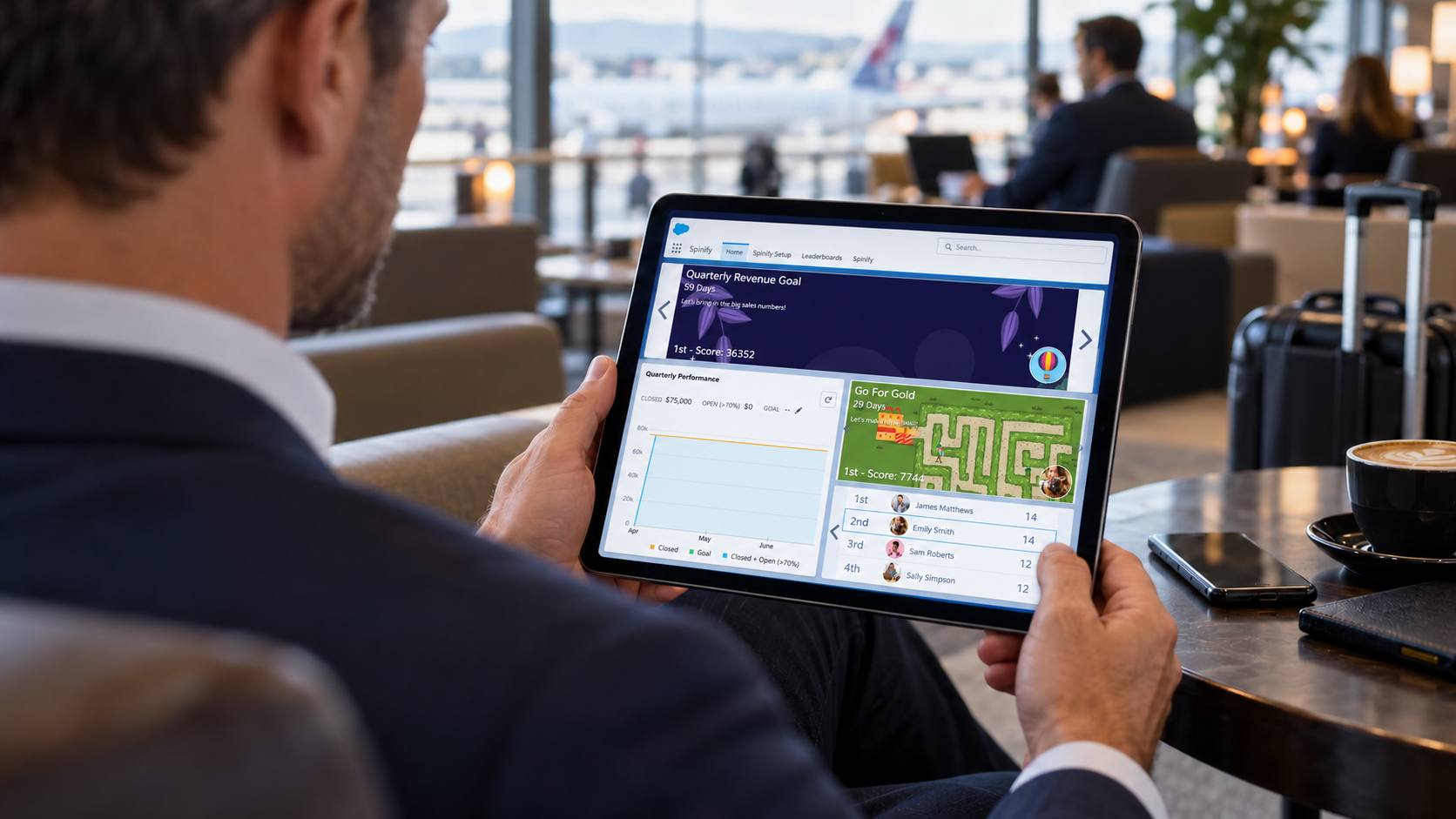
Before choosing sales gamification software, confirm whether the platform can:
- Map Salesforce users into relevant teams or groups.
- Support the organization’s regional and branch structures.
- Configure separate competitions for different business units.
- Display performance information to appropriate audiences.
- Accommodate employees who change teams or territories.
- Work with the required Salesforce objects, fields, and reports.
- Support the organization’s security and administrative requirements.
The key question isn’t simply whether the platform integrates with Salesforce. It’s whether that integration supports the way your organization actually operates.
For additional guidance on Salesforce record visibility and access controls, consult Salesforce Help.
Which Types of Sales Gamification Tools Work Best for Different Team Structures?
Different categories of gamification software address different organizational needs.
Some focus primarily on individual motivation. Others emphasize team competitions, management reporting, or broader sales performance management.
For organizations with complex hierarchies, understanding these differences is more important than choosing the platform with the most leaderboard designs.
| Tool category | Best suited for | Hierarchy considerations |
| Individual leaderboard tools | Small, centralized sales teams | May provide limited team segmentation |
| Team competition platforms | Branches, departments, and regional sales groups | Require configurable team assignments |
| Sales performance management tools | Organizations prioritizing management reporting | May emphasize analysis over engagement |
| Salesforce-connected gamification platforms | Organizations linking CRM activity with competitions and incentives | Require validation of user mappings, visibility, and permissions |
A mid-market organization with two sales offices may only need separate team leaderboards.
An enterprise operating across multiple countries, territories, and business units needs considerably more flexibility.
That doesn’t mean the most complicated software is automatically the best choice.
The right solution is the one that supports your existing sales structure without creating unnecessary administrative work.
How Can Regional and Branch-Level Leaderboards Improve Sales Performance?
Regional and branch-level leaderboards make performance more relevant by allowing employees to compete within meaningful groups.
They also help managers recognize progress without comparing teams operating under completely different market conditions.
Consider a hypothetical organization with 12 branches across four regions.
One branch operates in a mature metropolitan market. Another serves a smaller territory with fewer potential accounts.
If every representative is ranked by total revenue, employees in larger territories may have an inherent advantage.
Instead, the organization could create competitions around:
- Percentage of individual quota achieved
- Meetings booked against assigned targets
- Qualified opportunities generated
- Pipeline growth relative to branch goals
- Team-wide improvement over a previous period
- Conversion rates across comparable sales activities
These metrics can help create fairer comparisons.
A smaller branch that consistently exceeds its target may deserve recognition even if its total revenue is lower than that of a larger location.
Similarly, a team improving its pipeline conversion rate may be demonstrating valuable progress despite not generating the highest sales volume.
Why Fairness Matters in Team-Based Sales Incentives

Sales competitions are most useful when employees believe they have a reasonable opportunity to succeed.
When competitions consistently favor the largest territories or most experienced representatives, participation may become concentrated among a small group of top performers.
Using comparable targets, improvement-based measures, and different competition formats can help organizations recognize a broader range of achievements.
The goal is to reward meaningful performance, not simply the biggest territory.
What Features Should Enterprise Sales Leaders Prioritize?
Enterprise sales leaders should prioritize hierarchy configuration, Salesforce data accuracy, access controls, flexible competition design, and administrative efficiency.
These capabilities determine whether sales gamification remains practical as an organization grows.
Salesforce Gamification Software Evaluation Checklist
| Enterprise requirement | What to look for |
| Salesforce integration | Support for relevant CRM objects, reports, fields, and performance data |
| Team hierarchy configuration | Ability to organize users into branches, regions, or departments |
| Regional leaderboards | Separate performance views for relevant groups |
| Team-based competitions | Support for individual and group incentives |
| Flexible scoring | Custom metrics, targets, and comparable performance measures |
| Data visibility | Appropriate controls over who can access performance information |
| Organizational changes | Manageable processes for employee transfers and team updates |
| Administrative efficiency | Competition management without excessive technical intervention |
| Performance reporting | Visibility into activity, targets, and progress |
| Coaching support | Tools that help managers identify and address performance gaps |
One frequently overlooked consideration is administrative flexibility.
If every new competition requires extensive assistance from a Salesforce administrator, managers may eventually stop creating them.
The best implementation balances IT governance with practical control for sales leaders.
How Does Spinify Support Salesforce-Based Sales Gamification?
Spinify helps Salesforce-connected sales organizations turn CRM performance data into visible, engaging competitions, leaderboards, and recognition experiences.
For organizations operating across branches, regions, or departments, Spinify’s Teams and Offices features provide ways to organize employees into meaningful groups.
Managers can create competitions around relevant sales performance metrics, including activities, opportunities, and progress against targets.
Spinify also combines gamification with performance tracking, automated recognition, and AI-powered coaching to help organizations reinforce productive sales behaviors.
This makes the platform relevant to businesses that want to encourage individual achievement while supporting broader team performance goals.
Spinify Capabilities for Multi-Team Sales Organizations
| Enterprise requirement | How Spinify supports it |
| Salesforce-connected performance data | Salesforce integration and CRM-based competitions |
| Branch and department organization | Teams and Offices |
| Individual and team incentives | Configurable competitions and leaderboards |
| Different performance objectives | Customizable metrics and targets |
| Progress against goals | Performance tracking and pacing indicators |
| Recognition across teams | Achievements and automated recognition |
| Distributed sales teams | Shared leaderboard displays and communication integrations |
| Performance development | AI-powered coaching and performance insights |
| Complex Salesforce access requirements | Configuration and permission requirements should be validated during evaluation |
These capabilities can help sales leaders make performance more visible across different teams without relying exclusively on static CRM reports.
However, enterprise buyers should confirm how their specific Salesforce role hierarchy, user mappings, custom fields, and access requirements will work with Spinify.
Spinify’s Teams and Offices features should not be assumed to automatically replicate Salesforce’s native role hierarchy.
The most useful product demonstration is one built around your actual sales organization, rather than a generic leaderboard.
Example: Using Spinify Across Multiple Sales Branches

Imagine a national sales organization operating across four regions and 20 branches.
Its leadership team wants to encourage qualified opportunity creation without creating unfair competition between territories.
A possible Spinify implementation could involve:
- Organizing representatives into relevant Teams and Offices.
- Creating branch-level competitions focused on qualified opportunities.
- Using percentage-to-target metrics to compare performance more fairly.
- Displaying relevant leaderboards across office and remote environments.
- Recognizing individual achievements alongside team results.
- Using performance insights to identify employees who may benefit from additional coaching.
The organization could then review changes in participation, activity, conversion, and target attainment to evaluate whether the program is supporting its goals.
This is an illustrative implementation scenario. Specific configurations and Salesforce data requirements should be confirmed during setup.
Explore Spinify’s sales gamification platform to learn more about its approach to Salesforce-connected performance engagement.
How Should Organizations Implement Gamification Across Multiple Salesforce Teams?
A successful rollout begins with clear performance goals and a realistic understanding of how teams are organized.
Rather than introducing company-wide competitions immediately, organizations should begin with a manageable pilot, validate their Salesforce data, and expand after confirming that the approach works.
Step 1: Map Your Sales Hierarchy
Document reporting lines, regions, branches, territories, and team ownership.
Identify which groups need separate competitions and which managers require visibility into their performance.
Step 2: Choose Meaningful Performance Metrics
Select activities and outcomes that employees can influence.
For example, if the business objective is to improve pipeline generation, qualified meetings and opportunities created may be more relevant than raw call volume.
Step 3: Create Comparable Competition Groups
Avoid competitions that unfairly favor larger territories, more experienced representatives, or teams with different sales cycles.
Consider percentage-to-target scoring and improvement-based measures where appropriate.
Step 4: Validate Salesforce Data
Confirm that the required records, fields, ownership rules, and reporting periods are accurate.
Check how Salesforce data will appear in competitions and leaderboards.
Step 5: Pilot With Selected Teams
Launch competitions with a small number of branches or regions.
Gather feedback from managers and representatives about fairness, visibility, and usefulness.
Step 6: Expand Gradually
Introduce additional teams after reviewing participation, performance data, and administrative requirements.
This approach helps organizations identify problems before scaling them across the business.
Salesforce’s Trailhead learning platform also provides educational resources for understanding Salesforce administration, data models, and organizational access structures.
Can Team-Based Sales Incentives Work Across Different Regions?
Yes. Team-based sales incentives can work across regions when organizations choose comparable performance measures and establish clear competition rules.
Percentage-to-target scoring, improvement-based challenges, and regional goals can provide fairer comparisons than raw revenue rankings.
Consider two hypothetical branches.
| Metric | Branch A | Branch B |
| Sales representatives | 25 | 8 |
| Monthly revenue target | $2,000,000 | $500,000 |
| Actual revenue | $1,800,000 | $525,000 |
| Target attainment | 90% | 105% |
A leaderboard based exclusively on total revenue would place Branch A ahead.
But Branch B has exceeded its assigned target, while Branch A has fallen short.
A quota-attainment leaderboard tells a different and potentially more useful story.
Organizations can also combine team competitions with individual recognition so strong contributors remain visible even when their teams do not win.
The objective is to create incentives that encourage productive behavior while reflecting differences in team size, territory opportunity, and performance expectations.
How Can Sales Leaders Measure Whether Gamification Is Working?
Sales leaders should evaluate gamification through changes in employee participation, productive sales activity, conversion, quota attainment, and commercial outcomes.
Leaderboard engagement alone doesn’t prove that a program improves revenue performance.
Start by establishing baseline results before launching competitions.
Then monitor whether the targeted behaviors change.
Useful indicators include:
- Participation across teams and performance levels
- Qualified meetings generated
- Opportunities created
- Pipeline conversion rates
- Percentage of quota achieved
- Revenue and gross profit
- Performance sustainability after competitions end
Compare results across consistent periods and account for external factors such as seasonality, staffing changes, and marketing activity.
For example, if representatives are logging more calls but qualified pipeline remains flat, the competition may be encouraging activity without improving outcomes.
That could indicate a need to adjust the scoring model or provide additional coaching.
For financial ROI measurement, organizations should compare attributable incremental gross profit and measurable cost savings against total program costs.
Gamification should reinforce the behaviors that contribute to business outcomes, not encourage employees to chase points.
What Is the Best Salesforce Gamification Software for Your Organization?

The best Salesforce gamification software is the platform that matches your organizational structure, supports fair competitions, and provides managers with useful performance visibility.
For complex sales teams, configuration flexibility and reliable CRM data matter more than the number of available game mechanics.
For Salesforce-based organizations seeking CRM-connected competitions, configurable performance targets, team leaderboards, and employee recognition, Spinify is a platform worth shortlisting.
Its combination of gamification, performance visibility, and AI-powered coaching makes it particularly relevant for sales leaders who want to connect daily sales behaviors with broader performance goals.
However, organizations with complex Salesforce role hierarchies should evaluate the platform using their actual team structure.
Before making a decision, test practical scenarios:
- Can branch managers access the performance information they need?
- Can regional directors compare relevant teams and locations?
- Can executives monitor broader performance without exposing inappropriate data?
- Can representatives participate in competitions aligned with their roles?
- What happens when an employee transfers between territories?
- Can managers configure competitions without excessive administrative work?
- Are Salesforce data mappings and reporting rules accurate?
These questions reveal more about enterprise suitability than a polished demonstration dashboard.
For organizations exploring Salesforce-connected leaderboards, team incentives, and performance recognition, Spinify provides a relevant starting point.
Visit Spinify to explore the platform and request a demonstration tailored to your sales organization.
Frequently Asked Questions About Salesforce Gamification Software
Does Salesforce Have Built-In Sales Gamification Software?
Salesforce provides reporting, dashboards, and performance management capabilities that help organizations monitor sales results. However, organizations seeking dedicated competitions, animated leaderboards, and automated recognition may use additional gamification software.
Salesforce-connected platforms can use existing CRM performance data to create more engaging experiences without requiring representatives to maintain separate performance records.
Can Spinify Create Competitions Using Salesforce Data?
Yes. Spinify supports Salesforce integration and can use Salesforce-connected performance data to power competitions and leaderboards.
Depending on the configuration, teams can track relevant sales activities, opportunities, and performance outcomes.
Organizations with complex reporting structures should validate their specific data mappings, team assignments, and permission requirements during implementation.
Does Spinify Automatically Follow Salesforce Role Hierarchies?
Spinify provides Teams and Offices features for organizing users and supports Salesforce-connected performance data.
However, organizations should not assume that Salesforce’s native role hierarchy automatically determines Spinify team assignments or leaderboard access.
Enterprise buyers should confirm how their required hierarchy, permissions, and data visibility can be configured.
How Do You Keep Sales Competitions Fair Across Branches?
Fair branch competitions use comparable performance measures rather than relying exclusively on total revenue or activity volume.
Percentage of quota achieved, conversion rates, and improvement against historical performance can help account for territory differences.
Leaders should also consider staffing levels, sales cycles, and market potential when defining competition rules.
Can Sales Gamification Software Support Remote and Hybrid Teams?
Yes. Gamification platforms can provide shared performance visibility across offices and remote locations through online dashboards, mobile experiences, and communication integrations.
Spinify supports multiple display and communication options, allowing distributed employees to follow competitions and celebrate achievements without working in the same physical location.
What Salesforce Data Should Be Used in Sales Competitions?
The most useful Salesforce data depends on the organization’s business objectives.
Common examples include qualified meetings, opportunities created, pipeline progression, closed-won deals, and quota attainment.
Organizations should prioritize metrics that employees can influence and that connect to meaningful commercial outcomes.
What Should Enterprise Buyers Test Before Choosing Salesforce Gamification Software?
Enterprise buyers should test user mappings, team structures, Salesforce field compatibility, competition configuration, data visibility, and administrative workflows.
A pilot involving real managers, representatives, and regional groups can help identify issues before a company-wide rollout.
Final Thoughts: Choose Gamification That Fits Your Sales Organization
Sales gamification software should support the way your organization works, not force every employee into the same leaderboard.
For Salesforce-based businesses operating across multiple branches, regions, and management levels, that means choosing a platform that combines reliable CRM data with configurable competitions, fair performance measures, and meaningful recognition.
Spinify helps organizations bring Salesforce-connected performance data into engaging leaderboards, competitions, recognition, and coaching experiences.
The next step is to evaluate how those capabilities fit your specific team structure, reporting requirements, and performance objectives.
Ready to make Salesforce performance more visible and engaging across your sales organization?
Explore Spinify’s sales gamification software and request a demo tailored to your regional and branch structure.