Sales Gamification Software
What is Sales Gamification?
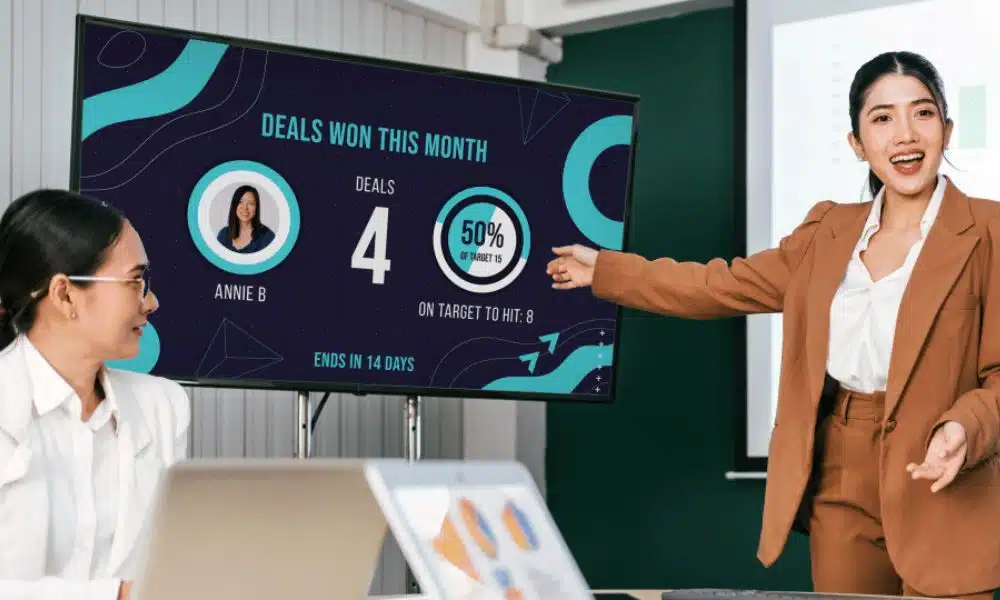
Sales gamification transforms essential sales tasks (cold calls, demos, closing deals) into an engaging game-like experience. Reps earn points, badges, and rewards for their actions, boosting motivation,performance and productivity.
Spinify leads the way in sales gamification, providing real-time feedback, AI powered features, lively leaderboards, and exciting rewards to fuel your sales team’s competitive spirit and drive results.

Points
Reward points and bragging rights for every target or milestone achieved.

Badges
Set up automatic badges based on activities or goals to reward the achievers.

Levels
Create tiers to encourage better performance and help your team members compare stats.
Why gamify your workflow with Spinify?
Use Spinify’s innovative sales gamification tools to create friendly competition within your team and motivate individuals to boost their performance (here’s the best way). Gamification is a tried and tested way of increasing motivation, improving collaboration, and providing instant feedback. With Spinify, you can easily set targets for your sales team, create engaging sales contests and track performance in an engaging way.
Everybody wants to reach that next level or earn the badge they’ve been working towards, and a sales gamification platform put this psychological phenomenon to good use. It works for games like Candy Crush, and it also works when you’re trying to boost your team’s sales!

Adam Latham
Vice President of Growth Strategy, Double A Solutions, LLC
We have increased production month over month, every month. Sales gamification is an excellent way to motivate your team on a daily basis.

The benefits of gamification for company culture

Retain more employees

Improves team accountability

Increase employee performance
Make work more rewarding
Sales gamification offers new ways to reward your employees when they achieve success.

Automated celebration
Kick off the celebration when you want every time.
Fully customizable
Create custom messages for any occasion.

Play your song
Choose the celebration song for every goal and milestone.

Congratulate your reps
Send personalized messages to your team to celebrate them.

Ring the gong
Have virtual gongs ring with your custom message for the team.

Youtube videos
Get creative and upload songs or choose a video to play along with the celebration.

Personalized Memes
Inject some personality into your announcements with personalized memes.

Motivational Messages
Inspire the team to keep doing their best.
Why Sales Gamification Works
From being a buzzword to something gimmicky, sales gamification was used to label a bunch of different things. But most of them were not actually relevant to actual sales gamification.
Read Article
Keep your team engaged and connected
Inspire teamwork and individual effort to boost productivity and morale.

The Worlds #1 Sales Gamification Platform
Other sales gamification companies may make big claims about what they offer, but under deliver. You deserve the best! Spinify is the best sales gamification platform on the planet, and we have the data, features, stats, and testimony to back up that claim! We make it easy to gamify your team’s day to day by integrating with the most popular CRMs and Data apps. PLUS, if you find we don’t integrate with your data app, we have multiple easy-to-use alternative solutions available to connect any data platform you use.Motivate your team to perform better by making each goal more rewarding to reach.
A change of pace without disrupting your workflow
Spinify integrates seamlessly with your existing platforms.












Don’t just take our word for it!
See what our Customers are saying

The biggest problems we are able to solve with Spinify is keeping our agents engaged and in friendly competition with each other, we noticed an incredible uplift the moment we implemented Spinify as the agents were able to see key metrics of their performance and their peers

Vice President Retail Support, MAX Credit Union
The absolute simplicity of the platform. it does not try to do everything to help a team stay on track, but what it does, it does exceptionally well. It is visually attractive, and has been designed with gamification principles in mind

Scaling Up Coach for Tech Companies, Director, Investor, Ex-CEO
We love how visual it is! The leader-boards encourage healthy competition and staff achievements are recorded in real-time, when someone wins an award, everyone can celebrate the success! We also love using it to advertise exciting news/events etc.

HR Manager, Punch!
Our sales team is remote and Spinify has allowed our folks to stay competitive using the Salesforce tab, the mobile app, and the daily winner emails. It’s really helped us to work more tightly.

Salesforce
Gamification of my stats makes it more exciting to keep track of where I am at for the month.

Ellie Downs
The product is easy to integrate, just some minor integration with our Salesforce account and we were creating flashy content for our Sales Room Floor. Required no real insight as to how to build and configure reports as they are all available from templates.

Director of Sales & Customer Experience, RingByName
FAQs
-
How does Spinify our sales gamification software work?
Spinify transforms key sales activities into exciting challenges. Reps earn points, badges, and rewards for actions like making calls, booking demos, and closing deals. Our platform offers customizable leaderboards, real-time feedback, and a variety of ways to celebrate wins, keeping your team motivated and engaged.
How to use gamification to increase sales?
Spinify provides all the tools you need to create a powerful and effective sales gamification strategy,(here’s the best way)
Set clear goals: Easily define the sales activities you want to boost, whether it’s calls, demos, or closed deals.Gamify the sales process: Spinify offers a range of gamification elements like points, levels, badges, contests, and leaderboards, letting you tailor the experience to your team.Provide instant feedback: Reps get real-time updates on their progress, keeping them motivated and celebrating wins as they happen.Track results and iterate: Spinify’s analytics give you data-driven insights into what’s working, allowing you to refine your gamification strategy for maximum impact.-
Is sales gamification a viable long-term technique for sales?
Absolutely! Gamification works because it taps into core human motivations for achievement, recognition, and social connection. When designed thoughtfully and integrated into your sales culture, gamification can deliver lasting improvements in motivation, performance, and team morale. Your team is ready for it!
Level up results with gamification
Add friendly competition to drive motivation and give your team the recognition they crave, all while boosting data and performance visibility to the max! Unlock your team’s potential by making work more engaging with gamification.